The Tahitian pearl is much more than just a piece of jewelry; it is the result of a long natural process and exceptional artisanal craftsmanship.
Cultivated in the pristine lagoons of French Polynesia, each pearl requires time, precision, and a great deal of patience.
How are Tahitian pearls cultivated? Here are the secrets behind the creation of this treasure of the ocean.
An exceptional natural environment
It all begins in lagoons with pure, nutrient-rich, and protected waters.
Pearl farms are primarily located in areas where the water is clear and well-oxygenated, the temperature is stable, and biodiversity is balanced.
This environment is therefore essential to ensuring the quality of the pearls.
The oyster that produces the pearl
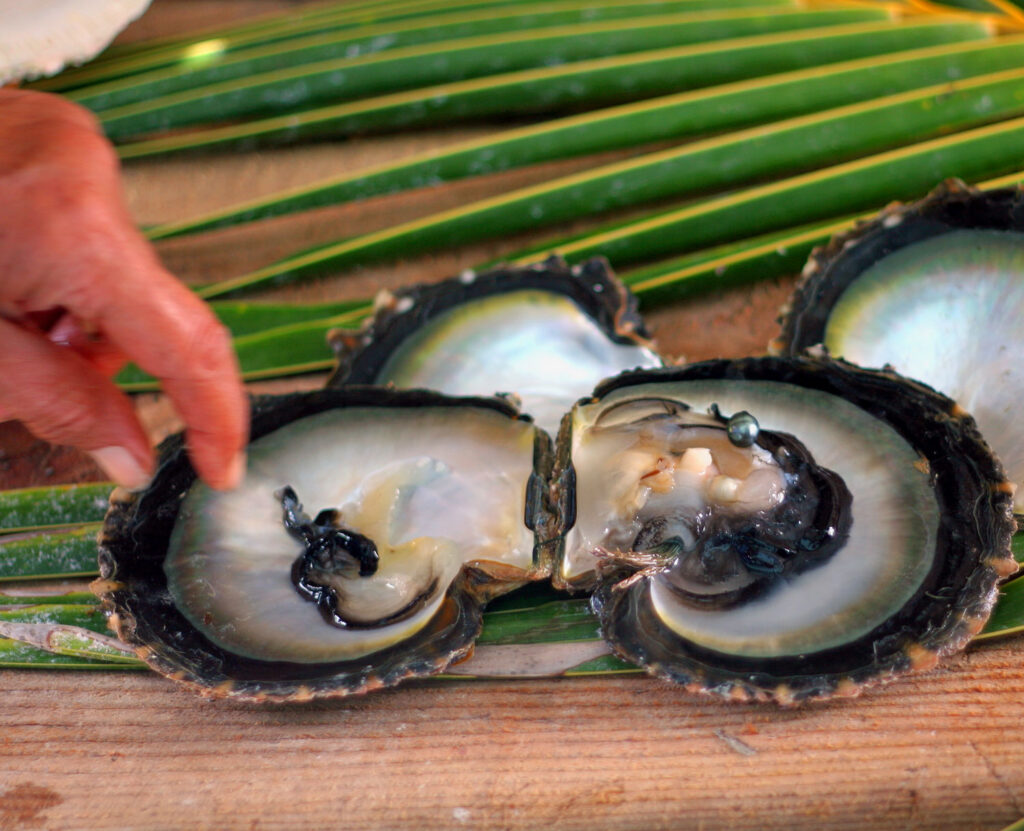
The Tahitian pearl is produced by a specific type of oyster known as the black-lipped oyster (Pinctada margaritifera).
It is this that gives the pearl its deep, dark colors, which are unique in the world.
How are Tahitian pearls cultivated? The key step: implantation
The cultivation of a pearl begins with a delicate process called grafting.
An experienced oyster farmer inserts a small nucleus (often made of mother-of-pearl) and also adds a piece of mantle from another oyster.
This task requires great precision and years of experience.
So, it is this process that triggers the formation of the Tahitian pearl.
The Formation of the Tahitian Pearl
After grafting, the oyster is returned to the lagoon and will then:
- cover the core with layers of mother-of-pearl
- gradually form the pearl
This process takes, on average:
18 to 24 months
Meanwhile, oyster farmers regularly monitor the oysters, primarily by cleaning them, but also by checking their health and protecting them from parasites.
The Magic of Colors
The colors of Tahitian pearls develop naturally as they grow.
They therefore depend on several factors, including the oyster itself, the environment, light, and water quality.
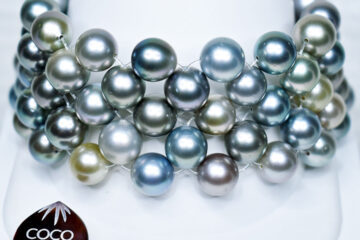
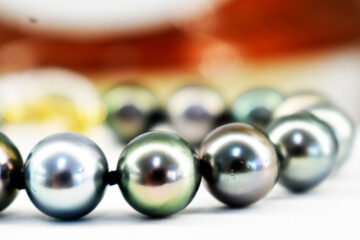
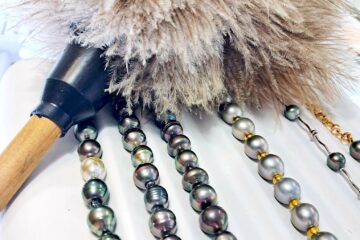
That’s what gives them their unique hues: peacock green, gray, eggplant, or even blue…
But no two Tahitian pearls are alike.
The Harvest
After several months (or even years), the Tahitian pearls are then carefully harvested.
Each Tahitian pearl is then cleaned, sorted, and graded according to its quality.
The main criteria are:
- luster or shine
- surface
- shape
- size
For this reason, only a small fraction of Tahitian pearls achieve exceptional quality.
A rare and precious product
Cultivating a Tahitian pearl is a long and unpredictable process, because not all oysters produce a pearl, not all pearls are perfect, and every step requires careful attention.
And it is this rarity that makes it so valuable.
Expertise that blends tradition and precision
Pearl farming in French Polynesia is a unique blend of modern techniques, traditional craftsmanship, and, above all, a deep respect for nature.
Every Tahitian pearl tells a story: the story of the ocean, of time, and of human hands.
Conclusion: so, how are Tahitian pearls cultivated?
How are Tahitian pearls cultivated? Behind every Tahitian pearl lies meticulous work and exceptional patience.
From grafting to harvest, it takes several years to produce this exceptional natural gem.
Choosing a Tahitian pearl means choosing not only a rare product, but also a unique craftsmanship and, ultimately, a direct connection to the lagoons of French Polynesia.
Discover COCOBLANC MOOREA’s creations
Every Tahitian pearl selected by COCOBLANC MOOREA is chosen for its luster and character, sourced directly from the lagoons of French Polynesia.